Lab Research Projects
Active prototypes and off-grid technology blueprints engineered by Isuru Buddhika inside the Apexfern laboratory.
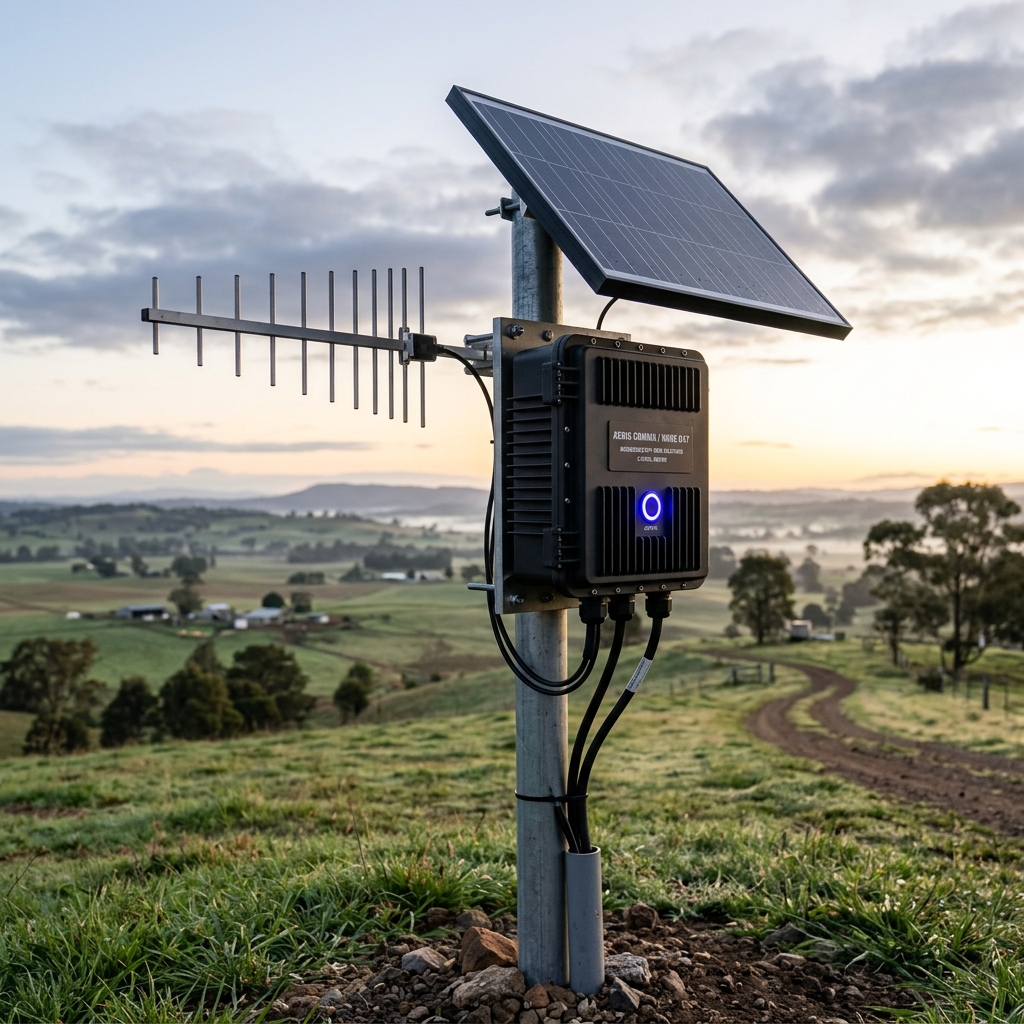
MeshCom LoRa Node
Technical Introduction: This device enables long-range, two-way telemetry and command transmission over sub-GHz radio waves from 8 to 15 kilometers, operating entirely without commercial cellular towers or internet.
Research Purpose: Built to solve rural connectivity blackouts in Sri Lanka. It provides an autonomous, localized mesh network that eliminates platform dependencies and recurring monthly communication fees.
Operation & Technology: Collects soil telemetry (moisture, NPK sensors) at ultra-low power. Individual nodes automatically discover and relay data through adjacent nodes (multi-hop mesh) to scale regional coverage.

Ethos-OS Controller
Technical Introduction: A rugged industrial microcontroller core running a custom-written Real-Time Operating System (RTOS) kernel configured specifically for localized off-grid control loops.
Research Purpose: To engineer a fault-tolerant hardware and software control core capable of surviving electrostatic discharges, humidity, and voltage surges without requiring physical manual resets.
Operation & Technology: Integrates dedicated hardware watchdogs and dynamic task recovery routines to auto-correct software freezes in microseconds, actuating valves and motors with sub-millisecond precision.
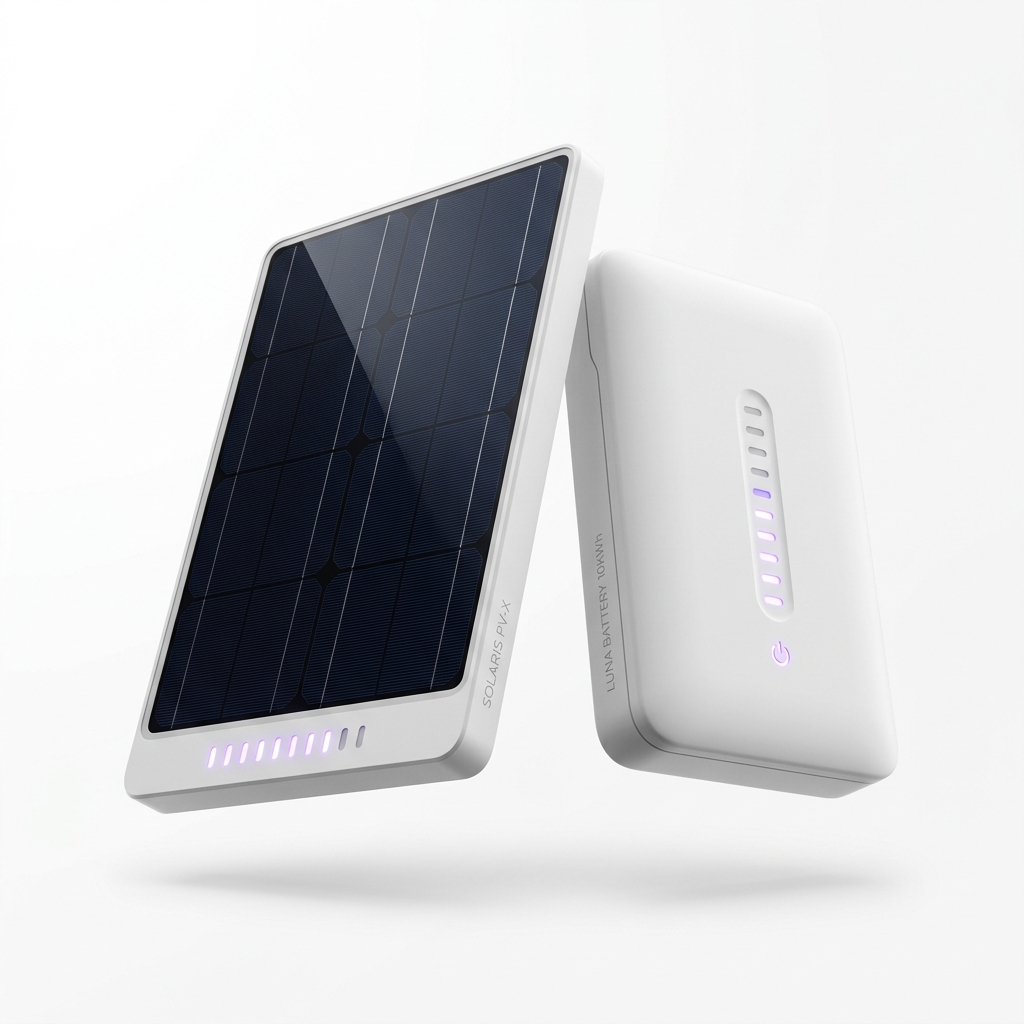
Sol-BP Controller
Technical Introduction: An active cell balancer and MPPT solar charging controller designed to monitor, balance, and allocate off-grid solar energy yields dynamically.
Research Purpose: To mitigate the rapid degradation of expensive lithium-ion and LiFePO4 battery banks in remote installations, extending overall storage lifespan up to 3 times.
Operation & Technology: Executes dynamic load shifting, queuing power-hungry operations (such as high-pressure water pumps) during peak solar irradiance hours to minimize overnight depth of battery discharge.
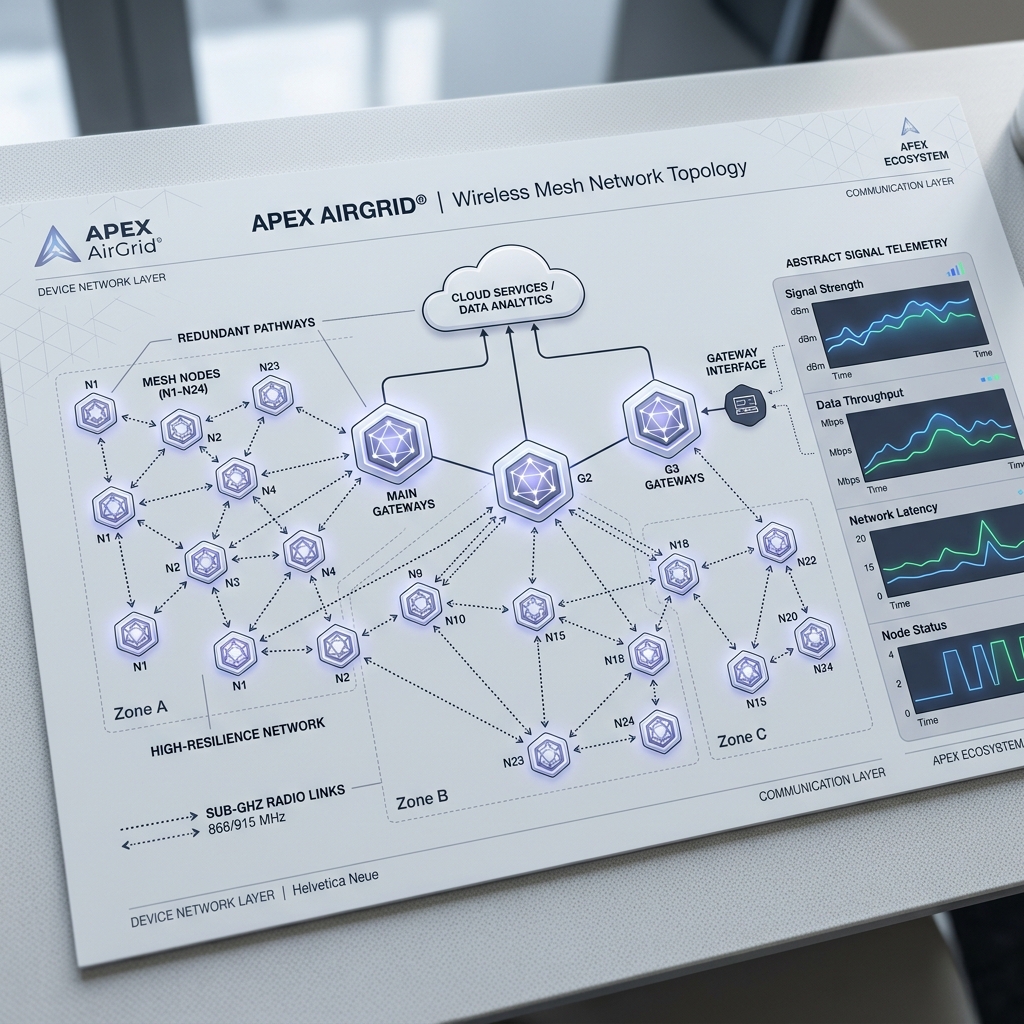
The Power of Three: Integrated Synergy
The MeshCom LoRa Node, Ethos-OS Controller, and Sol-BP Controller are designed to work as a unified closed-loop ecosystem. Instead of isolated units, they share real-time states to maintain system longevity:
1. Closed-Loop Telemetry & Control Loop
Sol-BP continually tracks energy harvesting and cell states, feeding this metrics database to Ethos-OS. The OS schedules heavy motor actuation based on available solar limits, and commands MeshCom to broadcast telemetry logs to the base station without internet.
2. Power-Aware Kernel Scheduling
During cloudy seasons or night hours, Sol-BP commands the Ethos-OS kernel to put non-essential sensors and the radio transceiver into deep-sleep modes, waking up in microseconds only when thresholds are breached.
3. Self-Healing Routing Trees
When deployed in groups, these nodes automatically form a mesh network. If a node suffers a temporary power drop, adjacent nodes dynamically route its telemetry packets to bridge communication.
Strategic Need & Global Value
Building robust off-grid infrastructures addresses global climate shifts, platform dependencies, and economic resilience:
1. Climate & Food Security
By automating remote irrigation and monitoring soil metrics in areas without internet or power grids, we enable smart agriculture to flourish anywhere, maximizing crop yield despite changing climate patterns.
2. Absolute Data Sovereignty
Because the entire architecture runs completely offline, sensitive crop logs, yield metrics, and system controls never leak to foreign clouds or third-party servers, ensuring 100% private data ownership.
3. Zero Recurring Costs
Once installed, the system incurs zero monthly subscription fees, data plans, or utility grid costs. The network operates free of charge on open license-free radio bands and solar energy.
4. Battery Longevity & E-Waste Reduction
Sol-BP's active balancing algorithms extend lithium cell life to over 10 years, drastically cutting down maintenance costs and preventing toxic battery chemicals from entering landfills prematurely.
Fields of Application
1. Precision & Climate-Smart Agriculture
Ideal for remote fields, tea estates, and coconut plantations where utility grids are absent. By measuring soil moisture and NPK metrics locally, it automates drip irrigation, saving water and optimizing fertilizer delivery.
2. Off-Grid Industrial IoT & Telemetry
Perfect for mining sectors, remote hydro plants, logging camps, and water treatment tanks. It controls heavy machinery valves and reports sensor metrics reliably in harsh environments without cellular coverage.
3. Disaster Recovery & Ad-Hoc Emergency Networks
When landslides, floods, or cyclones take down towers, these nodes quickly deploy to establish an emergency communication mesh, routing GPS beacons and status logs for search and rescue operations.
4. Border Security & Remote Perimeter Monitoring
Enables automated perimeter monitoring in national parks or high-security areas. Edge AI cameras detect wildlife movement or intrusions, sending instant alarms over LoRa mesh to security rooms.
5. Forestry & Environmental Conservation Networks
Microphone arrays running audio classifier models detect chainsaw frequencies or gunshots, routing exact coordinates to forest guard stations to combat illegal logging and poaching.
6. Maritime & Coastal Telemetry networks
Connects small fishing boats near coastal areas to shore telemetry stations, broadcasting weather alerts and distress calls without expensive satellite hardware.
How Offline AI is Integrated
1. Edge AI & TinyML On-Device Inference
Bypasses cloud dependencies. Neural networks are compressed using TensorFlow Lite for Microcontrollers and embedded directly into the Ethos-OS controller ROM/SRAM, running local machine learning queries on-device.
2. On-Site Computer Vision & Classification
Connected camera modules run lightweight CNNs to detect leaf spot diseases, insect pests, or perimeter breaches in milliseconds, triggering immediate localized remedies without cloud delay.
3. Local Machine Learning Telemetry
Runs on-board regression models on historic environmental metrics to predict local soil drying trends and evaporation curves, making automated adjustments without needing external data servers.
4. On-Device Audio Event Classification
Audio captures are converted to MFCCs locally. Tiny neural networks analyze these signatures to classify critical acoustic events like chainsaws, forest fires, or animal distress sounds.
5. Intelligent Multi-Sensor Data Fusion
Combines telemetry inputs (moisture, wind, pressure) into a local neural filter. This eliminates sensor drift anomalies and ensures extremely reliable data decisions.
6. Secure Local Storage & Encryption
All neural weights, logs, and images are written to encrypted local flash chips. Utilizes AES-256 hardware encryption to ensure absolute data privacy even if physical nodes are stolen.
Operation as an Intelligent Ecosystem
1. Predictive Autonomous Decision Making
Moves beyond static threshold rules. AI analyzes moisture dynamics and barometric trends to predict local rain probability, dynamically optimizing watering cycles to save water and energy.
2. Dynamic Power Optimization & Load Shifting
During cloudy spells, the AI queues high-wattage tasks (like water pumps) only during peak MPPT solar charging hours, scheduling deep-sleep routines to preserve battery health.
3. Self-Healing Networks & Predictive Maintenance
If a mesh neighbor fails, nodes re-route traffic automatically. AI also tracks battery internal resistance curves to alert operators of required maintenance before a hardware breakdown occurs.
4. Adaptive Self-Calibration Loops
On-device ML models monitor incoming telemetry patterns to detect sensor aging or seasonal drift, self-calibrating calculations without manual technician visits.
5. Autonomous Fail-Safe Actuation
If extreme thermal limits or water leaks are detected, the system immediately shuts down valves or disconnects charging logs dynamically at the firmware level.
6. Distributed Collaborative Intelligence
Nodes coordinate task scheduling with adjacent nodes over LoRa mesh, negotiating power allocations and duty cycles to ensure regional grid continuity.
Dual-Use Risks & Ethical Stance
Like any advanced system, offline mesh networks and autonomous edge AI can be weaponized (e.g., unauthorized tracking or tactical military actions). To mitigate this dual-use risk, we enforce strict boundaries:
1. Ethical Copyleft Licensing
Our software and hardware designs are strictly licensed for civil, agricultural, environmental, and humanitarian preservation purposes. Deployment in offensive weapons or tactical warfare is prohibited.
2. Firmware-Level Isolation
The Ethos-OS core features cryptographic verification. Unauthorized firmware overrides or integrations with tactical military hardware trigger automatic system locks.
3. Peer-Reviewed Open Standards
Our protocols are fully transparent, allowing independent peer audits to verify that no backdoors, surveillance modules, or weapon telemetry subsystems exist.
4. Domain-Constrained AI Models
AI models are trained exclusively for ecological classification (plants, animal calls, moisture). Face recognition, drone targeting, and tactical communication algorithms are excluded from codebase.